Batch shoots with Bangkok creators in 2026: what to pay
By Mai Influence
Batch shoots are the line item Bangkok brands quietly discover in year two of running creator marketing, and the first time it saves them money is the last time it does it by accident. The pitch is straightforward: instead of booking one creator for one deliverable, you book three to six creators across a single production day, share a location, share a crew, and pay a bundle rate. The savings are real. So are the ways the day falls apart when the brief was written for one creator and copy-pasted five times.
This piece is written for SEA brand marketers running Bangkok campaigns in 2026 who have shot with individual creators before and want to compress the next campaign into one day. It covers what the THB bundle actually looks like, where the discount stops applying, and the operational lines that keep the shoot on schedule.
What a batch shoot actually is
A batch shoot is a single production day, usually eight to ten hours, where multiple creators rotate through a shared set and shared crew. Each creator delivers their own asset in their own voice. The location is booked once, the lighting is set once, the food and drink and props are staged once. The creators arrive on staggered call times, film their own thing, and leave. The brand walks out with four to six independent posts that cost less than four to six independent shoot days would.
The category matters. Batch shoots work well for food and restaurant briefs where the venue is the set, beauty briefs where a controlled backdrop is the set, and fashion or apparel where a lookbook style pulls multiple creators through the same rack. They fall over on travel briefs, gaming briefs, and anything where the creator's own home or studio is a required part of the frame. See our food and restaurant creator rates guide and fashion and apparel post for the base rates before you layer batching on top.
The THB bundle ranges
The honest maths on a Bangkok batch shoot in 2026, assuming a single Sukhumvit or Onnut location, half-day per creator, and one Reel plus one carousel per deliverable:
- Three nano creators (5k to 20k followers): 18,000 to 32,000 THB total, roughly 6,000 to 11,000 THB per creator. The individual rate would sit at 7,000 to 13,000 THB, so the bundle saves 15 to 20 percent per creator.
- Four micro creators (30k to 80k followers): 68,000 to 110,000 THB total, roughly 17,000 to 28,000 THB per creator. Individual rates would sit at 22,000 to 35,000 THB, so the bundle saves 20 to 25 percent.
- Two macros plus two micros mixed: 145,000 to 220,000 THB total. Macros discount less on batching because their opportunity cost per hour is higher; expect only 8 to 12 percent off their standalone rate.
- Six nano creators for a UGC-only pack: 42,000 to 72,000 THB total, no polished feed post, delivery is raw vertical footage the brand cuts itself. This is where batching earns its full value.
Add 12,000 to 25,000 THB for the shared location if it is a private studio, or waive it if the brief is filming inside a brand-owned venue. Add 8,000 to 18,000 THB for a runner and a stylist on rotation. Add a food and drink budget of roughly 400 THB per person on set, which is where most first-time batch shoots underspend and pay for it in mood by hour six.
Where the discount stops earning its keep
The batch discount is real up to about six creators on one day. Past that, the day breaks. The crew gets tired, the light in a Bangkok studio shifts past four in the afternoon in ways that force a reset, and the last creator on the schedule always draws the short straw. If your brief needs seven or more assets, split it across two days at the same location. Two five-creator days at 50,000 THB each will beat one ten-creator day at 90,000 THB every time, because the ten-creator day produces two unusable posts.
The other place the discount stops is category exclusivity. If you are running a batch shoot for a beauty brand, none of the six creators can have a competing beauty deliverable in-market during the campaign window. That constraint compounds; you cannot line up six creators with clean windows on twenty-four hours' notice. Bank on a two-week booking lead, minimum, and pay a small hold fee if you need the roster reserved earlier. Our creator exclusivity post covers the multipliers when the window matters.
The call-sheet mechanics that keep the day honest
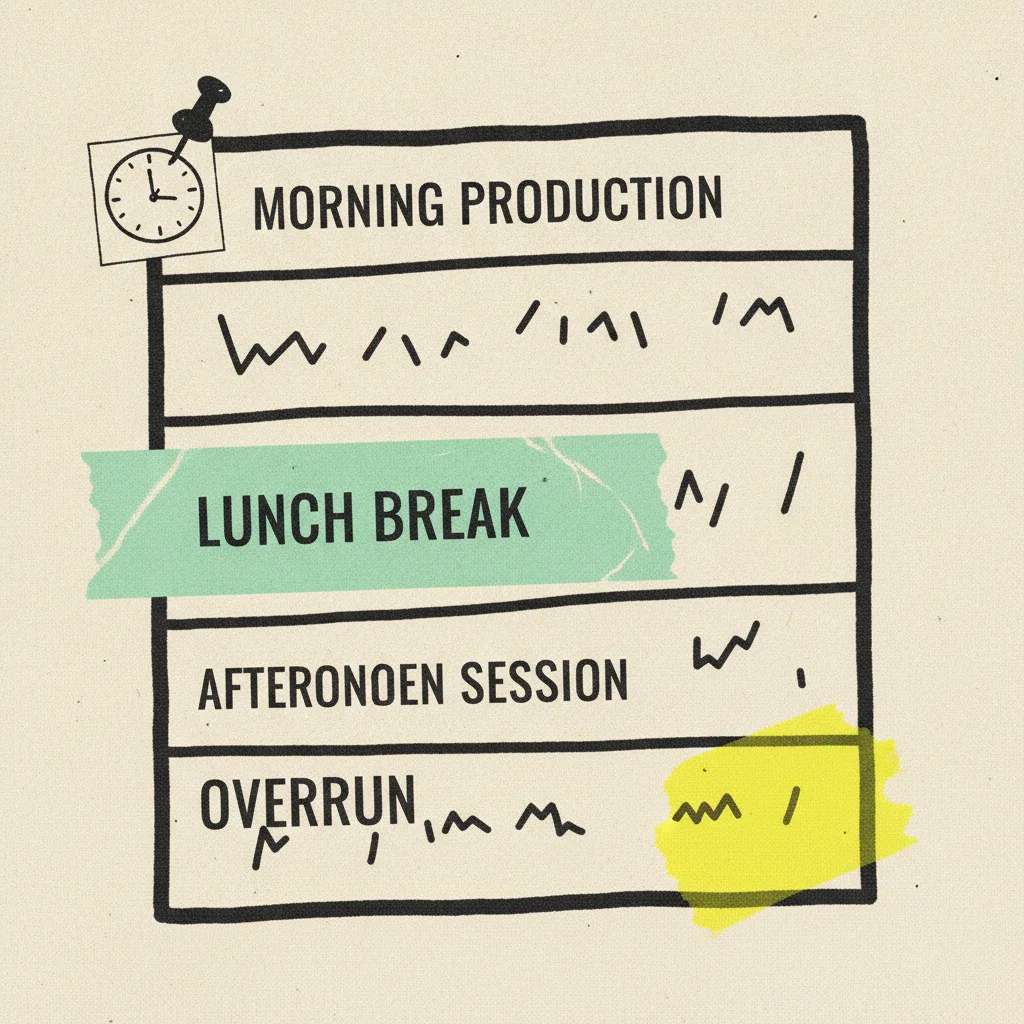
The call sheet is the actual document that determines whether a batch shoot ships or burns. It needs three columns nobody skips. First, staggered arrival and wrap times, ninety minutes per creator with a fifteen-minute buffer between rotations. Second, a named crew member responsible for each creator's on-set experience; a batch shoot without a dedicated point of contact per creator produces four creators who feel like extras on their own set. Third, an explicit review-and-approve window at the end of each rotation so the creator does not leave before the brand has a rough cut in hand.
Lunch is a shared block, roughly forty-five minutes in the middle, and it is where the brief either builds camaraderie or exposes that the creators do not want to be at the same table. Do not skip it and do not brand it as a working meal. Feed people properly, let them talk, and the second half of the day runs better. Every producer we work with in Bangkok says the same thing, and every first-time brand batch marketer tries to compress it and pays for it.
A batch shoot rewards the brief that treats each creator as an independent deliverable sharing a set, not five deliverables squeezed out of one long script. The bundle rate is the reward for planning, not for cramming.
Deliverable ownership and the edit queue
The last mistake to avoid is treating the batched footage as one editorial deliverable. Each creator retains editorial control over their own cut in their own voice. If you want a unified brand cutdown as well, that is a separate deliverable with a separate line item, usually 12,000 to 28,000 THB paid to a producer or editor, not a discount you extract from the creators. Every attempt we have seen to get creators to hand over raw files as a byproduct of a batch day ends the same way: with a follow-up invoice or a broken relationship. Pay for the raw files as their own scope, or do not ask for them. Our raw files post has the ranges.
The last operational detail is the payment structure. A batch day should carry a single milestone-based invoice from a producer or the marketplace, not six separate creator invoices trickling in over the following month. Escrow the whole day's budget on booking, release fifty percent on wrap, and hold the balance until every creator's post is live and the wrap report is filed. That structure keeps the roster intact for the next batch. Our payment terms guide walks through the deposit and milestone splits that hold up.
When batching is the wrong call
Batching is the wrong call on a launch brief where the story hinges on one creator's personal narrative, on any category where the creators need to film in their own homes, and on any campaign where the deliverables have to stagger over three weeks for feed pacing. In those cases, book the individual days, take the honest rate, and skip the bundle. The 20 percent you might have saved on a batch day is not worth the launch that reads as a single sponsored moment instead of a rolling week of coverage.
If the campaign is a lookbook, a menu launch, a store opening, or a category-education pack, batch it. If it is a story, do not.