Beauty and skincare creators in Bangkok in 2026: what to pay
By Mai Influence
Beauty is the loudest category on Bangkok creator briefs in 2026, and the one that loses the most budget to assumptions. Briefs from skincare brands launching in Tops, Eveandboy, or Watsons keep treating beauty rates as a discount on the general roster. They are not. Beauty creators carry licensing risk, claim risk, and a longer shoot day than a generic lifestyle post, and the rate card reflects all three.
This guide is the honest range from the Mai Influence roster, broken down by tier, format, and category-specific cost lines. If you have not read our Bangkok creator rates honest guide yet, start there for the baseline, then come back. Beauty sits a layer above.
What beauty briefs actually pay in 2026
A single skincare Reel from a Bangkok creator in 2026 sits in these bands, in THB, for one platform-native post and one set of stories:
- Nano (under 10k): 6,000 to 14,000.
- Micro (10k to 60k): 14,000 to 38,000.
- Mid (60k to 200k): 38,000 to 95,000.
- Macro (200k to 800k): 95,000 to 260,000.
- Top-tier beauty (800k+, named): 260,000 to 700,000+.
Bundles compress the per-asset cost. One Reel plus one carousel plus three stories from a mid-tier beauty creator lands around 55,000 to 80,000 THB rather than the 38,000 to 95,000 a single Reel might quote. The carousel is where the ingredient call-outs live, which is why beauty briefs that drop it pay more per claim, not less.
Live demos and unboxings carry their own line. A 30-minute beauty livestream on TikTok or Shopee Live runs 12,000 to 45,000 THB on top of the post fee, before commission. Our live commerce guide covers the commission maths.
Why beauty costs more than F&B or fashion
The same follower count, charged for the same platform, comes in 15 to 35 percent higher when the brief is beauty. Three reasons, all defensible.
First, shoot day length. A skincare Reel needs a clean before-and-after, ingredient close-ups, swatch tests, and product-in-hand B-roll. That is a 4 to 6 hour shoot for a deliverable that a snack brand could pull off in 90 minutes. Creators bill the day, not the cut.
Second, exclusivity is sharper. A Bangkok beauty creator who has shot for a Korean cushion brand cannot post a competing cushion for 60 to 90 days. The lockout is wider than F&B, where a creator can hop between a coffee chain and a snack within the same month. The creator exclusivity guide breaks down the multipliers.
Third, claim review. Skincare and cosmetics briefs route through a compliance check before the creator publishes, which adds a 2 to 5 day review window and at least one revision round. Most beauty creators bake one extra revision into the base rate.

PR seeding versus paid in beauty
Seeding works in beauty more often than in any other category. A well-packed mailer to 40 to 80 micro creators in the right Bangkok neighbourhoods, with a soft suggestion and a tracking link, will produce 15 to 25 organic stories and 5 to 10 unprompted posts. Cost: 80,000 to 180,000 THB inclusive of product, packaging, and the logistics line.
Two caveats the brief writer keeps missing. Seeded posts cannot be used in paid ads without a whitelisting agreement signed after the post lands. And seeded creators expect a paid follow-up if the first post performs. Treat seeding as the audition, not the campaign. Our product seeding versus paid post breakdown walks through the THB threshold where the maths flips.
For a launch in Eveandboy or Boots, the working ratio is seven seeded creators to one paid post, with the paid post going to a creator who already covered the brand organically in the last 90 days. That sequence cuts the cost-per-conversion by roughly a third compared to paying every creator from cold.
The FDA claim limit nobody costs into the brief
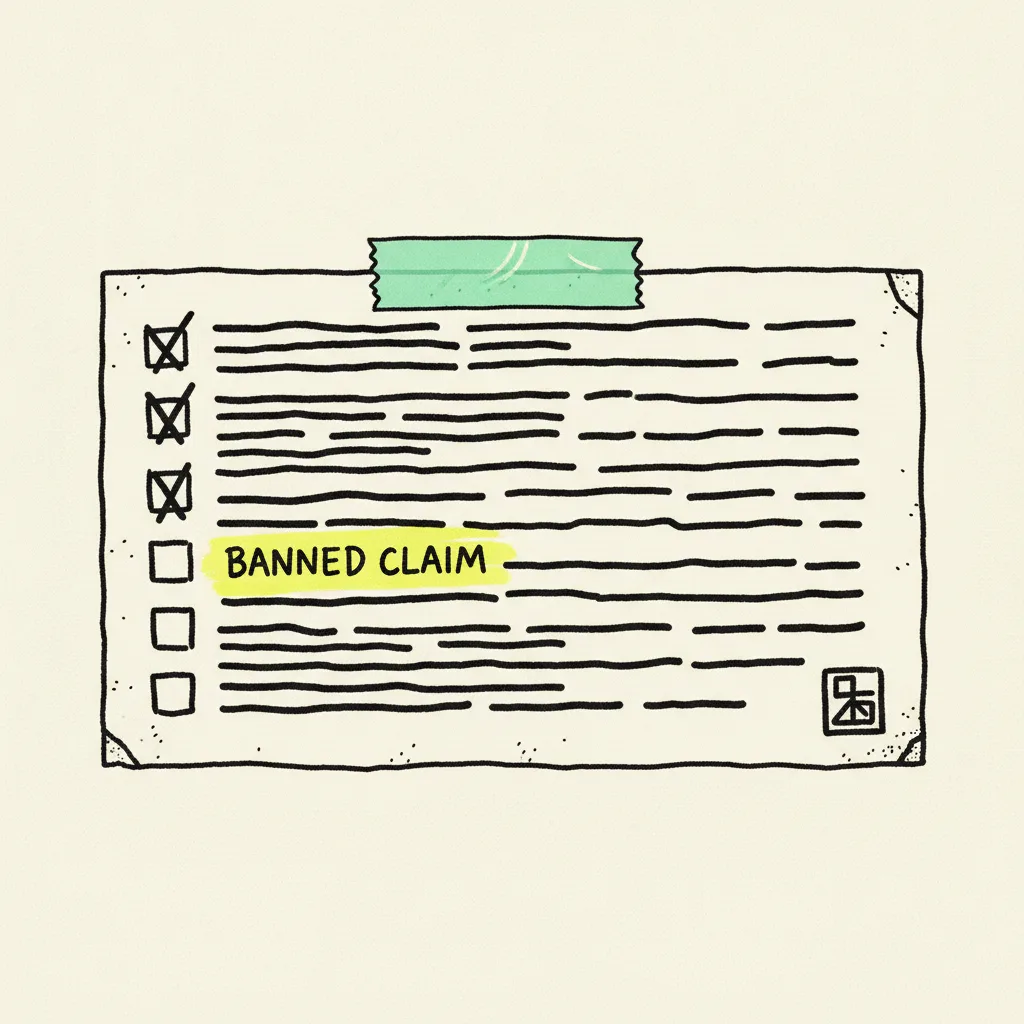
Thai FDA rules on cosmetic claims tightened in 2025 and are being enforced in 2026. A Bangkok creator cannot say a skincare product "treats" acne, "removes" wrinkles, or "whitens" skin without a registered medical device or pharmaceutical claim attached. They can say it "supports a clearer complexion" or "softens the look of fine lines". The wording is not a creative preference, it is a legal floor.
Briefs that hand the creator a script with banned verbs get one of two outcomes. Either the creator rewrites the line and ships the post, or compliance flags it and the brand pays a 100 percent kill fee with no post. Our ad disclosure rules guide lists the disclosure tags; the claim list itself lives at the Thai FDA cosmetic guidance page and the brief writer should pull it before sending the script.
When to skip beauty creators entirely
Three scenarios where the brief does not earn the spend.
If the product is a refill, a tool, or a behind-the-counter SKU, beauty creator content underperforms. The post lives or dies on the visual ritual, and a refill pouch has none.
The second is launches without retail distribution. Beauty discovery in Bangkok converts at the shelf. A creator post for a product only buyable on the brand's Shopify will land 30 to 60 percent below the conversion of the same post for a product sitting in Eveandboy. Spend the budget on retail listing fees first.
The third is anything in the prescription or device-adjacent space. Aesthetic clinics, prescription skincare, hair-loss treatments, and at-home devices all hit ad-platform limits that the creator cannot legally bypass. The brief moves to a different channel, not a different creator.
Brands that want the honest pre-brief shortlist can post the spec on Mai Influence and watch the offers come in with the FDA-aware caveats already written into the rates.