Ad disclosure rules for Bangkok creators in 2026
By Mai Influence
A Bangkok supplement brand pays a 90k-follower wellness creator 26,000 THB for two Reels and a Story set. The creator delivers on time, the posts land well, sell-through on the launch SKU clears the brief inside a week. Three weeks later the brand's lawyer flags that none of the three posts carry a paid-partnership tag, the captions never use the word โฆษณา, and the supplement copy references "clinical-grade absorption" which the Thai FDA never approved. The post stays up. The risk does not.
Disclosure is the part of a Bangkok creator brief that brand marketers in 2026 either over-engineer to the point of killing the post, or skip entirely and hope nobody at สคบ is scrolling that night. Neither option is the right one. The rules are clearer than the chatter on Thai marketing Twitter suggests, and the cost of getting them right is one extra line in the brief.
What the Thai regulator actually expects
Two agencies sit on top of creator advertising in Thailand. The Office of the Consumer Protection Board (สคบ, OCPB) governs misleading advertising and undisclosed paid endorsements under the Consumer Protection Act. The Food and Drug Administration (อย., Thai FDA) governs claims about food, cosmetics, supplements, and medical devices, and runs a separate approval workflow for any health or efficacy claim in an ad.
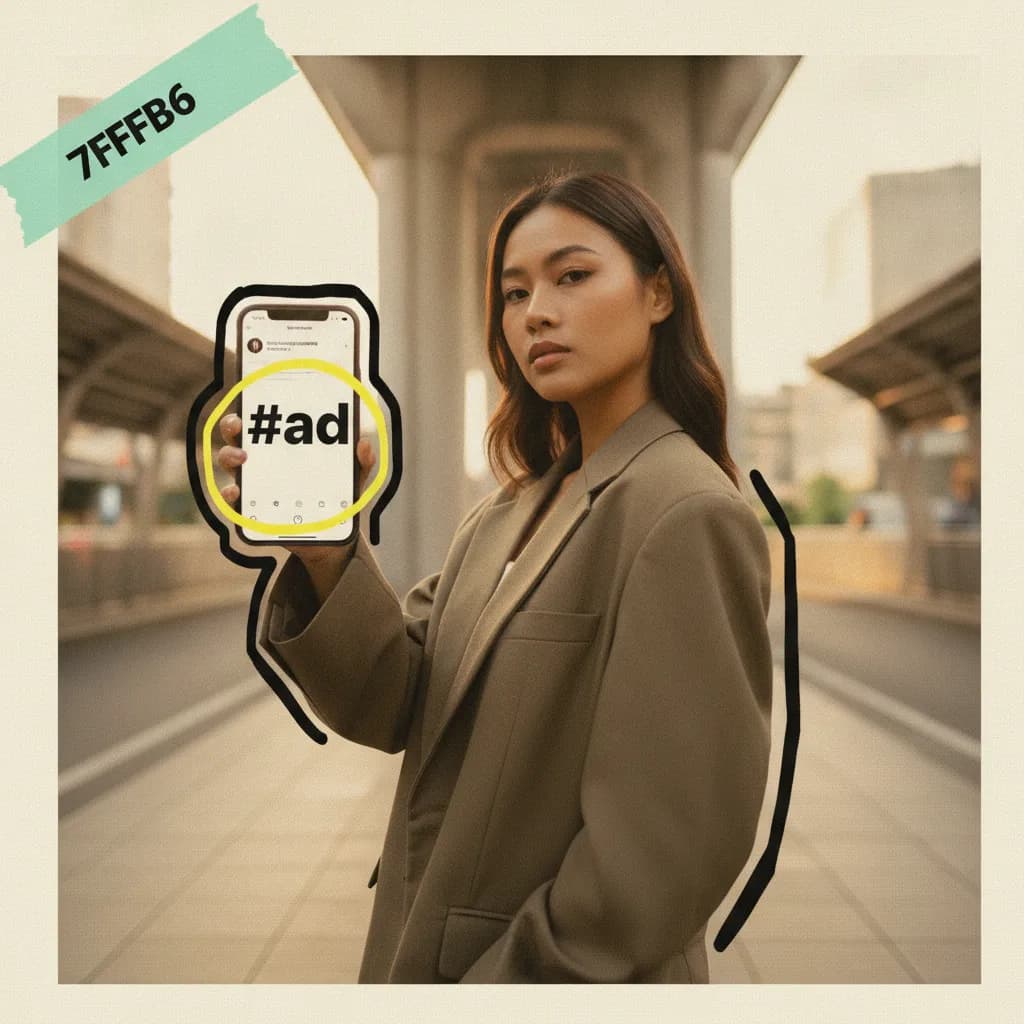
The baseline สคบ position, which Thai legal counsel has been advising on consistently through 2025 and into 2026, is that a paid creator post must be identifiable as a paid post to a reasonable viewer. That means a disclosure hashtag in the caption, a platform-native paid-partnership label, or both. The Thai hashtag convention has settled on #โฆษณา (advertisement) as the cleanest, with #ค่าโฆษณา and #ได้รับการสนับสนุน (sponsored) also accepted. English-language posts targeting expats can use #ad or #sponsored but should still carry a Thai tag if the audience overlap is meaningful.
The อย. layer is stricter and more category-specific. Any cosmetic, supplement, or food brief that uses claim language ("whitening", "anti-ageing", "reduces fat", "boosts immunity") needs the underlying claim approved on the product's อย. registration before the creator can repeat it. The brand carries that risk. The creator does not vet the registration. Briefs that hand a creator unapproved claim language are how brands end up with five-figure THB administrative fines and a forced-takedown on a viral post.
What the platforms require on top
Platform rules sit above whatever Thai law requires, and creators on the roster default to the stricter side because their account standing depends on it. The 2026 baseline brands should expect on a Bangkok brief:
- TikTok: the paid-partnership toggle is mandatory for any brief with a flat fee, a commission, or product seeding with content expectations. Posts without it get reach-throttled inside 48 hours and occasionally pulled. The
#โฆษณาhashtag in the caption is belt and braces. - Instagram Reels and Stories: branded content tag tied to the brand's IG account, plus
#โฆษณาor#adin the caption. Stories with a swipe-up to a Shopee or Lazada listing need both. - YouTube Shorts: the "paid promotion" checkbox at upload, plus a verbal or on-screen disclosure inside the first three seconds for a video under 60 seconds. Creators who skip the on-screen disclosure on Shorts get demonetised before the brand notices.
- Lemon8 and Threads: still maturing, but the same
#โฆษณาhashtag convention applies and the roster treats it as table stakes.
The disclosure language brands should put in the brief
The mistake brands make is leaving disclosure to "creator discretion" and then objecting to whatever the creator picks. The roster's preference, after enough late-stage edit fights, is for the brief to specify the exact disclosure language and placement up front. Two sentences in the brief solve this:
"Caption must include
#โฆษณาwithin the first three lines. Platform's native paid-partnership tag must be enabled before publish."
That is the whole compliance section. Anything longer reads like a corporate brief, which is the voice trap Bangkok creators already complain about. Anything shorter leaves room for the post to ship without either signal.
For อย.-regulated categories the brief needs one extra line, naming the approved claim language verbatim and a fallback for the creator to use if she wants to paraphrase. "Helps support skin clarity" is approvable. "Cures acne" is not. The creator does not know which is which on your specific อย. registration. The brief does.
Where this changes the rate card
Disclosure compliance does not move the THB number on the offer in the way usage rights or category exclusivity do. What it does move is the post type the creator will accept, and the speed of the approval cycle. Two patterns worth pricing in for 2026:
- Story-only briefs with
#โฆษณาin the caption get accepted at the standard rate. The creator is not exposing her grid to a disclosure tag that signals "this is an ad", which her audience reads correctly as "this is also a real recommendation". - อย.-regulated supplement and cosmetic briefs add a 10% to 20% premium on the upper-micro tier and above. The creator is reading the legal copy, choosing her wording carefully, and accepting that the post will be slower to write. Brands that fight this premium end up working with creators who do not read the copy, which is the same as not buying compliance at all.
The roster also runs faster approval cycles when the brief lands with the disclosure language pre-written. Two revision rounds become one. A 10-day delivery window holds at 7. The brands that treat disclosure as a negotiation slow their own campaign down.
What enforcement actually looks like
The honest middle on Thai enforcement in 2026 is that สคบ and อย. are not scanning every Reel. Action tends to follow a competitor complaint, a viral health-claim post that lands on the wrong desk, or a coordinated industry push (the supplement category has had two of these in the last 18 months). When action lands it tends to land on the brand, not the creator. The takedown notice goes to the SKU's importer or registrant of record. The fine, if there is one, follows the same paperwork.
The cost calculus is straightforward. The hashtag and the platform tag cost nothing. The อย. claim discipline costs one round of legal copy review on launch SKUs, which the brand should be doing anyway. The downside of skipping both is a forced takedown that wipes the campaign's measurement window mid-flight, which means the ROI numbers you were going to report up come back as a flat zero, and the next round of creator spend gets cut by the CFO who never wanted to fund it in the first place. Compliance is the cheapest insurance on a creator budget. We build the brief templates on the platform to enforce it by default, because the post that ships disclosed is the post that survives to be measured.