Ad disclosure rules Thai creators keep getting wrong
By Mai Influence
In Bangkok the fine for an un-tagged skincare ad lands on your invoice before it lands on the brand's. The Office of the Consumer Protection Board, the FDA Thailand (อย.) and the three big platforms each run their own disclosure rulebook, and creators are expected to pass all three in the same caption. Most posts clear two of the three and get flagged on the one that still carries a monetary penalty. This is the compliance work that silently decides whether your next invoice gets paid in full.
Nano creators (5K to 20K followers) treat disclosure as a vibe thing, micro (20K to 100K) treat it as a hashtag thing, and macro (100K and up) usually get it right because an agency manager has drilled them. The gap is where the money leaks out. Below are the mistakes repeat offenders keep making, written as if the fine notice is already in your DM.
The three Thailand rulebooks nobody reads together
The Consumer Protection Act B.E. 2522 and its 2019 amendments give the OCPB the power to fine misleading commercial content up to 500,000 THB per violation, with jail provisions reserved for repeat or health-related offences. The FDA Thailand layer sits on top of that for any post that mentions a cosmetic, supplement, food or medical device, and it requires a pre-approved advertising number (เลขที่ใบอนุญาตโฆษณา) displayed in the creative itself. On the platform layer, Meta, TikTok and YouTube each enforce their own branded-content policy, and non-compliance leads to shadow-reduction before any Thai regulator ever hears about it.
The three rulebooks disagree about where the disclosure goes. OCPB cares about the caption copy. FDA cares about on-screen text in the asset itself. Platforms care about the native toggle. Satisfying one does not satisfy the others, and brands rarely put all three obligations in the brief. If the brief only says "add #ad", read our brand-brief red flags breakdown before you accept.
Where creators keep botching the disclosure
Here are the five misses that show up most often in takedown logs and refund-chase threads:
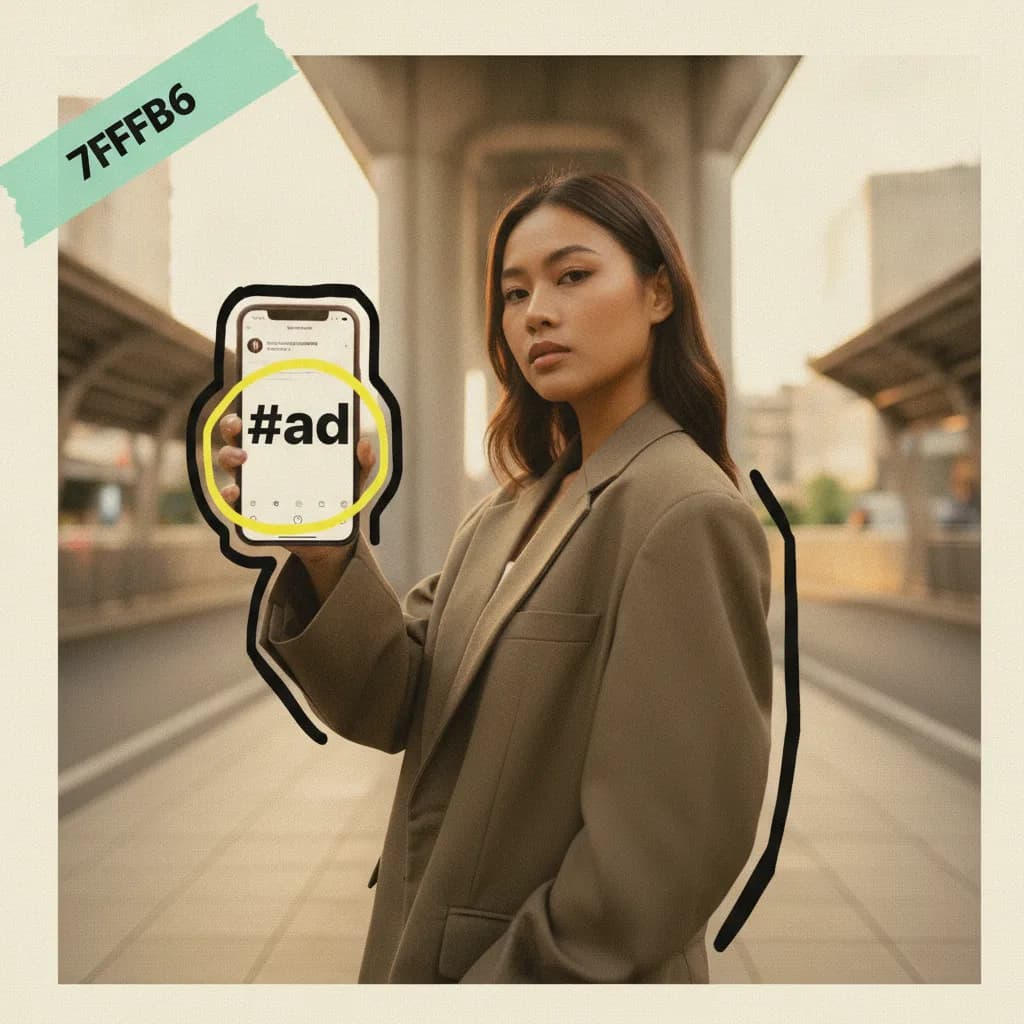
- Writing #pr or #gifted when the brand paid you cash. OCPB treats #pr as insufficient disclosure for a paid commercial relationship. The correct Thai tags are #โฆษณา or #ได้รับการสนับสนุน alongside #ad in the English layer.
- Burying the tag below the "more" fold on Instagram and TikTok. The disclosure must appear before the caption truncates, which on mobile is roughly the first 125 characters.
- Skipping disclosure on 24-hour Stories or Reels because "it disappears". Consumer protection liability does not expire with the format. Screenshots do.
- Posting a cosmetic or supplement without the FDA ad-approval number visible on the creative. This is the single most common FDA infraction, and the fine lands on whoever posted, not whoever paid.
- Using the caption disclosure but leaving the platform's branded-content toggle off. Meta and TikTok both treat the toggle as the primary signal; captions are secondary. Toggle off plus caption yes still counts as under-disclosed.
The simplest fix is to treat the toggle as a contractual deliverable, not a creative choice. Add a line to your offer: "Platform branded-content toggle enabled on all deliverables." Then charge for the review time it takes to confirm the brand's business manager is linked, because without the link the toggle fails silently.
The platform toggle is not optional
Meta's Branded Content tool, TikTok's Branded Content toggle, and YouTube's "Includes paid promotion" checkbox each live inside the composer, and each requires that the brand has either verified their account or opened an ad account on the platform. On Meta the brand has to tag you as a partner first, and if that permission is missing, the toggle greys out. On TikTok the toggle is self-serve, which is why TikTok posts have the highest compliance rate for creators and the lowest for brands.
If a brand asks you to post without the toggle to "test organic reach first", you are being asked to carry OCPB liability so they can run a cheap A/B. The counter is a flat 20 percent compliance premium on the fee, non-negotiable, documented in the offer. If they refuse, the honest answer is to decline the deliverable. You can price this directly inside your free creator profile on Mai Influence so the compliance premium is visible to the brand before they book you.
What a compliant Thai caption looks like
A disclosure-safe Bangkok caption carries four elements, in this order: the Thai paid-partnership hashtag within the first line, the English #ad or #sponsored within the first line, the FDA ad-approval number if the product is regulated, and the brand handle tagged in-caption rather than only in the image. The platform's native toggle sits on top of all four. A typical nano-tier post can get all five correct in under three minutes once you have a template saved.
If the disclosure is not visible before the caption truncates, the disclosure does not legally exist. Everything you do below that fold is for engagement, not compliance.
The template matters more than the exact words. Save one caption skeleton per vertical: beauty, F&B, supplement, finance, lifestyle. Finance posts in particular get flagged under SEC rules in addition to OCPB, and the SEC disclosure requires naming the product's licence status in-caption. Our usage-rights pricing table covers the fee uplift when a brand wants to re-run a compliance-tagged post as a paid ad.
The clause brands slip in to make non-disclosure your problem
Watch for an indemnity clause worded roughly as "Creator warrants that all posts comply with applicable advertising regulations". That single sentence transfers the entire OCPB and FDA liability onto you, including fines the brand triggers by failing to supply the ad-approval number in time. The counter is a redline: "Brand warrants and will supply all regulatory approvals, including FDA ad-approval number, at least 48 hours before scheduled post."
If the brand will not supply the FDA number and the product is a cosmetic or supplement, treat it as a disqualifying red flag. A nano-tier post that triggers an OCPB fine will cost you more than the fee, and the brand's "we'll handle it" verbal promise does not survive a government letter. Lock the clause before the shoot date and demand a kill-fee if they miss the approval window. Compliance work is billable work, and the top-quartile Bangkok creators are already pricing it into their rate cards.