Always-on vs burst creator spend in Bangkok 2026
By Mai Influence
Most Bangkok SMBs stare at the same question every January. Do you spread the creator budget evenly across the year, or hoard it for three or four noisy campaign weeks? Both work. Both also fail in specific, predictable ways. Here is how to choose in 2026 without burning a quarter learning the hard way.
What always-on actually looks like in Bangkok
Always-on means one to four creator posts a month, every month, with no month skipped. For a Bangkok SMB on a 200,000 to 400,000 THB annual creator budget, that typically works out to two micro-tier posts a month at 15,000 to 25,000 THB each, with occasional nano fillers.
The reason to run it is compounding. Your brand name shows up in Thai feeds continuously, your creator roster gets to know your product, and your reporting dataset gets large enough to spot which formats convert. By month six you stop guessing which creator type works and start briefing from evidence.
The reason it fails is attention drag. Twelve months of quiet, well-made posts rarely crack a single week of trending audio. If your product launch calendar has clear peaks (new SKU, Songkran, year-end gifting), always-on alone leaves the peaks under-amplified.
What a burst actually looks like
A burst is a two to four week window where you stack six to fifteen creator posts around a single hook. Typical Bangkok burst budgets sit between 150,000 and 500,000 THB per burst for SMBs, two to four bursts a year. The posting density is what pays, not the headline rate per creator.
Bursts move short-term volume. They are how you clear a seasonal SKU, launch a new flavour, or defend share when a competitor runs a loud campaign of their own. They also give your paid team a usable content pool for two to three months of boosted posts afterwards, which is where quiet always-on months quietly earn their keep.
The split that works for most Bangkok SMBs
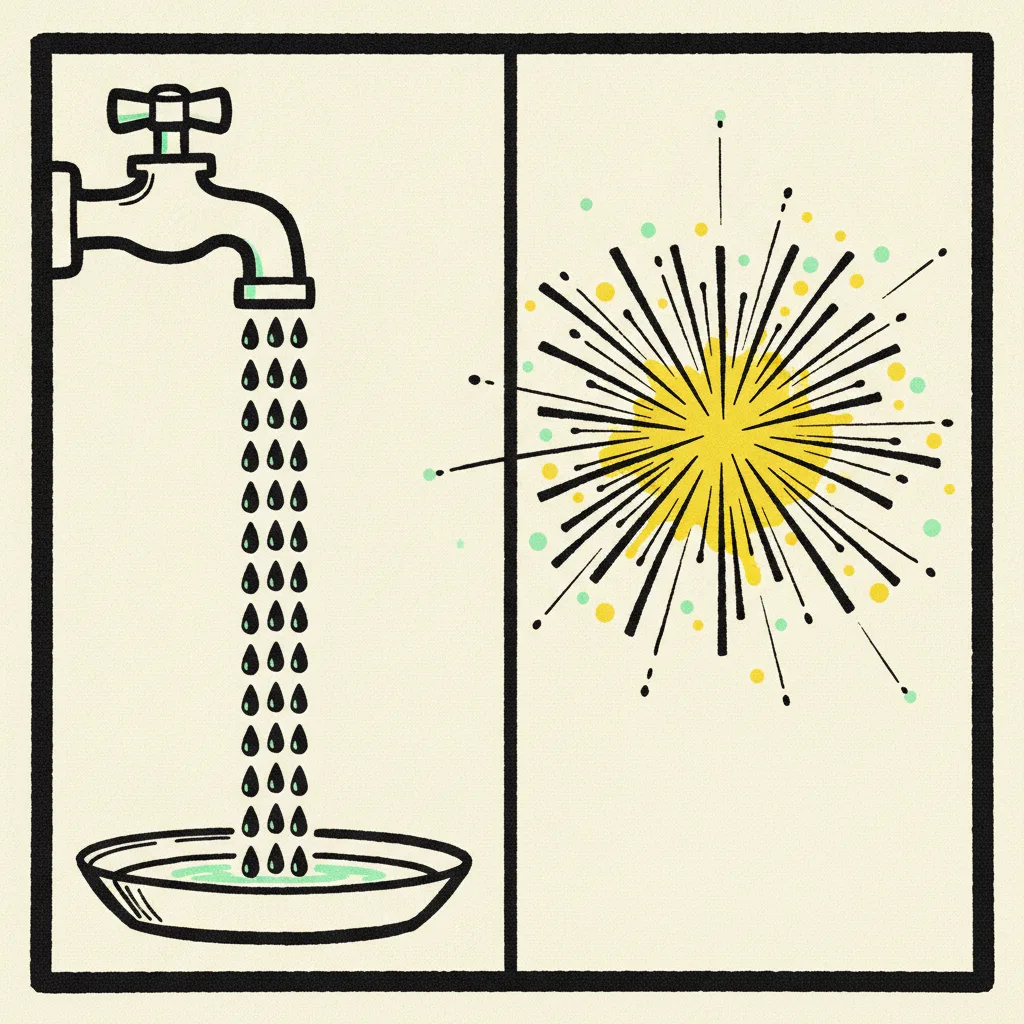
For brands under 600,000 THB a year on creators, the honest answer is roughly 60/40 burst-heavy. Two meaningful bursts (think Songkran and Q4 gifting) absorb most of the budget, and a thin always-on layer of one post a month keeps the handle warm and the content pool fresh for boosting.
Above 1,500,000 THB a year, the ratio flips. The audience you reach already knows you. Compounding beats novelty, so 60/40 always-on with one or two tactical bursts around real product moments is the more defensible shape. The exception is launches, where you concentrate up to 70% of a quarter's budget into a single four week window.
A workable baseline split by annual creator spend:
- Under 300,000 THB total: skip always-on entirely, run two bursts of 120,000 to 150,000 THB each.
- 300,000 to 600,000 THB: 40% always-on (one post/month), 60% split across two bursts.
- 600,000 to 1,500,000 THB: 50/50, with three bursts around real calendar events.
- 1,500,000 THB and up: 60/40 always-on, two or three bursts timed to launches, not seasons.
When to skip always-on entirely
Three cases, and only these three. First, your product is seasonal in a hard sense (sunscreen, Songkran gear, Christmas gifting) and you have fewer than six real buying weeks a year. Second, you have no in-house content team and no agency to repurpose the always-on footage, so the monthly posts never earn their second life. Third, your creative is bad enough that pushing it monthly actively erodes the brand, which happens more than agencies admit.
In those cases, pool everything into two bursts and leave the quiet months quiet. A thin always-on layer run badly costs more than it saves.

Benchmarks you can plan 2026 against
For Bangkok SMB brands we work with, the medians this year are: 18,000 THB average per micro post always-on, 22,000 THB average per micro post in-burst (creators charge a small premium for density weeks), 11 to 14 posts per burst, and roughly 2.3 months of paid repurposing life out of a well-cast burst. Nano rates sit 40 to 55% below micro, macro rates sit 2.5 to 4x above.
If your creator spend never has a quiet month and never has a loud week, you are probably paying full price for background noise.
The decision is less about which model is correct and more about which failure you can afford. Pick deliberately, plan the calendar in January, and treat any mid-year reshuffle as information about your brief, not about your creators.
If you want a second set of eyes on the split before you sign off the 2026 plan, book a brand call and we will pressure-test the numbers against your category.