Concept Briefs vs Script Briefs for Bangkok Creators
By Mai Influence
A brief is a purchase order in disguise. The moment you decide whether to send a concept or a locked script, you have decided who does the thinking, who owns the risk, and what you are actually paying for. Most Bangkok brands send a hybrid by accident, then wonder why the final cut looks like a committee wrote it.
Here is how to pick on purpose in 2026, and what each option costs you in time, money, and control.
What a concept brief actually is
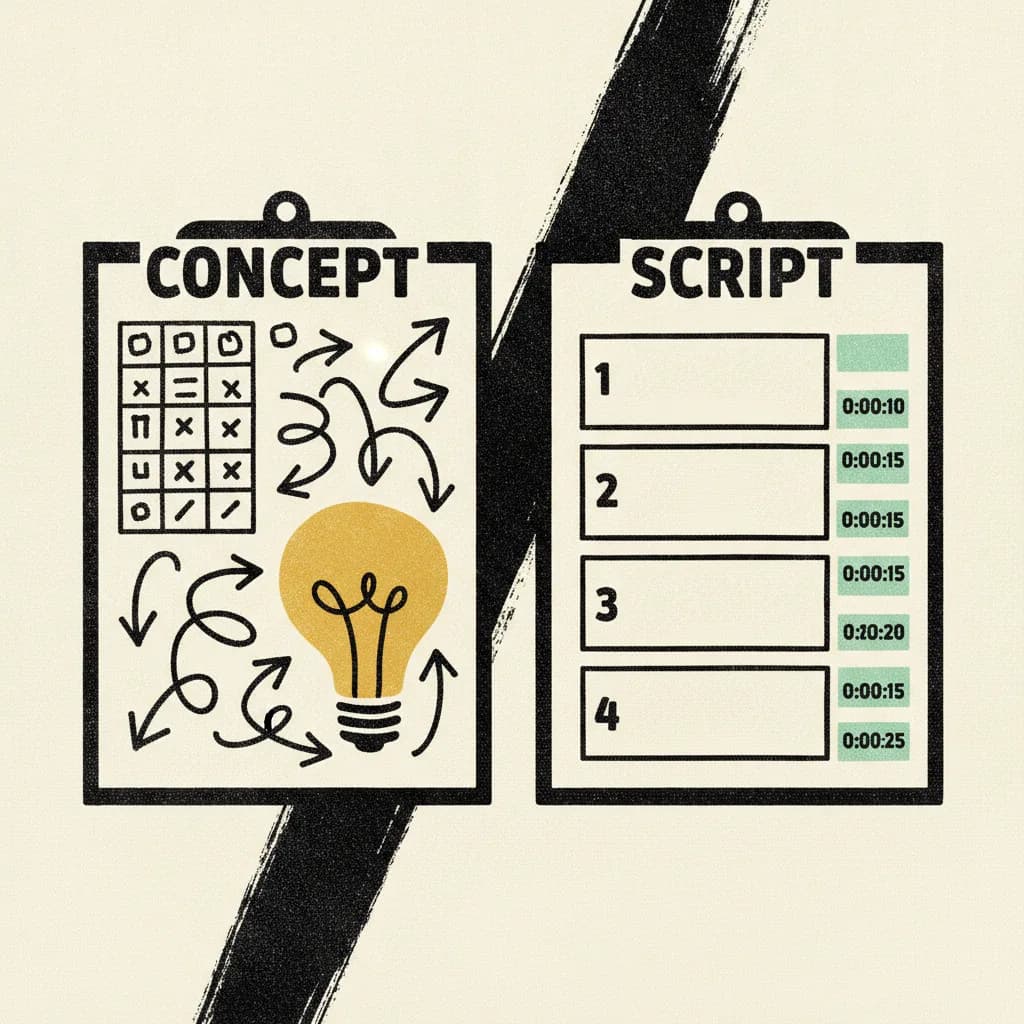
A concept brief hands the creator an objective, a product, three or four non-negotiable claims, and a mood. The creator returns a treatment, then makes the content. You approve the treatment. You do not approve every line.
The upside is native performance. Creators know their audience better than your brand team does, and platform algorithms punish scripts that read like scripts. Bangkok micro-creators (20K to 100K) consistently produce higher completion rates on concept briefs than on line-locked ones, because the hook lands in their own voice.
The downside is variance. You will get treatments you love and treatments that miss the product entirely. Plan for one round of resubmission before you shoot.

What a script brief actually is
A script brief locks the hook, the beats, the on-screen text, and often the exact voiceover. The creator becomes a talent, not a co-author. You are buying their face and their audience, not their judgement.
Script briefs make sense when the message is regulated, when legal has bled on every word, or when you are running a paid-social variant test where the only clean variable is the creator. Financial products, supplements, and anything with a Thai FDA claim usually needs this level of control.
The tradeoff is cost and reach. Locked scripts add roughly 20 to 40 percent to the fee in Bangkok, because the creator loses their voice and takes on delivery risk. Organic reach on locked-script content trends 30 to 50 percent lower than on concept-led work from the same creator, based on retrospective platform data we see across the roster.
How to decide in under a minute
Ask three questions. If two or more answers point the same way, that is your brief type.
- Is the message regulated or legally sensitive? Script.
- Will this run as a paid ad variant where the creator is a swappable input? Script.
- Do you want the creator's audience to actually stop scrolling? Concept.
There is a fourth question worth adding for Bangkok specifically: is this a Thai-language deliverable? If yes, lean concept. Direct Thai-to-brand-guideline translation almost always sounds imported, and Thai audiences pick that up in under two seconds.
The hybrid trap
The most expensive mistake we see is the fake concept brief. Brand sends "creative freedom" language on page one, then attaches a 14-bullet must-say list on page three, plus a screenshot of a competitor's ad and the note "something like this." The creator now has to guess which parts are real.
The result is two rounds of revisions that neither side priced in, a shoot day that runs long, and a final cut that satisfies nobody. If your must-say list is longer than four bullets, you are writing a script. Own it, pay for it, and move on.
If your must-say list is longer than four bullets, you are writing a script. Own it, pay for it, and move on.
What each brief should contain in 2026
For a concept brief in Bangkok, keep it to a single page. Objective, product, three to four non-negotiables, one platform, one deliverable spec, one deadline. Link out to your brand basics rather than pasting the whole guide. Ask for a written treatment before the shoot, not a full script.
For a script brief, the opposite. Deliver a shot-by-shot document with timecodes, on-screen text in both Thai and English if bilingual, disclosure placement, and the exact call-to-action. Attach the approved legal language as a separate PDF so it never gets edited in transit.
Platform patterns worth knowing
TikTok and Reels reward concept briefs. The algorithm reads pacing and audio patterns; a stiff read-through of your talking points signals ad, and reach collapses. On these platforms, concept-led work from a Bangkok micro-creator typically returns 2 to 3 times the completion rate of a locked script from the same person.
YouTube long-form and LINE VOOM tolerate scripts better, because viewers have already committed and the format expects structure. If your budget is going into a 90-second brand story rather than a 12-second hook, script is often the right call.
Instagram carousels sit in between. Copy tends to be tight, so the caption benefits from your fingerprints, while the images can stay in the creator's hands.
The pricing conversation
Be explicit in the outreach message. "Concept brief, one round of treatment feedback, one round of edit feedback" reads differently from "we will send full copy." Creators price the second higher, and they should. If your budget only supports concept-brief pricing, do not sneak in a script under the same rate. It is the fastest way to burn a working relationship.
When you are shortlisting talent for either format, browse vetted Bangkok creators on Mai Influence and filter by the ones who have delivered both concept and script work. The best campaigns usually mix both, on the same shoot day, at pricing you agreed in advance.
The one line to remember: a brief is a contract about who does the thinking. Decide who that is before you send.